Wednesday, 24 July 2013

Has anything changed?

Back at school, I am amazed at how much everything appears to be the same: social cliques, study habits, daily routine. How did we pick up so smoothly exactly where we left off? We strain to ask each other about summer experiences, but quickly the conversation veers towards apartment redecorating, upcoming dinners out, and lecture content. And yet I get the sense that many people feel changed by their summers, and are keeping that feeling within.

Without much fanfare, they have launched us into second year. Oddly, because there was much more fanfare at the start of first year (the white coat ceremony), this year feels like a significant departure from the past. A series of lectures on the "principles of drug therapy" represents the study of medicine opposed to human biology.

Here's a recipe with a little tweak on the norm, a variation in honor of summer (and my CSA share). My dad, being a food purist in favor of traditional recipes, commented, "What, do you want to eat like you live on a commune?" Despite his objections, the summer squash in this recipe adds a sweetness to the sauce and lightens the dish overall, a nice summer adjustment.

Summer pasta with squash and tomatoes (feeds two):

  • 2 cups large macaroni or shells
  • 1 medium-sized summer squash or zucchini
  • handful of cherry tomatoes
  • 1/2 red onion
  • 2 cloves garlic
  • handful of parsley
  • parmesan
  • 1/2 tablespoon each butter and olive oil
  • salt & pepper

Get water boiling for the pasta.

Melt butter and olive oil together in a saucepan. Finely chop the onion and garlic (both peeled), and add to the hot oil. Cook for a minute until fragrant. Chop the squash into 1" cubes (notice a pattern here?) and slice the tomatoes in half. Add the squash and cook for a few minutes until slightly soft, then add the tomatoes. Cook for just a minute and turn off the heat.

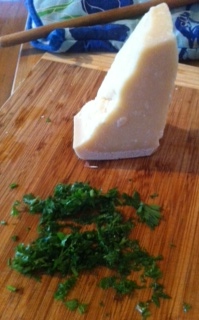
Cook the pasta in salted water. Before the pasta is fully cooked, drain most of the water and add the pasta to the saucepan with the sauce. Cook at high heat, stirring constantly, adding pasta water as needed. Stir in chopped parsley and grated parmesan. Serve hot!

+ =

Sunday, 21 July 2013

Summer vegetable soup

Back in Albany!

Exciting news: while I was away, I signed up for a CSA (community-supported agriculture) share from the local Patroon Land Farm. This means a fresh load of vegetables each week: beautiful kale, fennel, corn, lettuce, lots and lots of squash and zucchini, etc. For only $100, I will have fresh, local vegetables through October. I like CSA's because they take the decision about which vegetables I need to buy (which, as you might imagine, occupies a lot of brain power) out of my hands. Instead, I am presented with the challenge of how to use different (and abundant) vegetables.

This recipe comes from my friend Sasha's grandmother, the source of many delicious vegetable dishes.

Summer vegetable soup (two small servings):

  • 1 large zucchini or squash or several heads of broccoli (really any vegetable you like)
  • 4 cloves of fresh garlic
  • 1 small onion (I used three large scallions from my farm share instead)
  • 1-2 tablespoons olive oil (or butter)
  • 1-2 tablespoons sour cream or Greek yogurt
  • (chicken stock optional)
  • salt & pepper

Chop the garlic and onion into small pieces. Heat the olive oil and add the garlic and onions, cooking for a minute, until fragrant. Meanwhile, chop the zucchini into 1" pieces (skin on), then add to the hot pan. Saute over high heat, adding a 1/4-cupful of water (or chicken stock) as needed, until the zucchini is soft, much softer than usual for eating. You should be able to crush a piece using just the back of a spoon. Season with salt and pepper.

Turn off the heat and allow the zucchini to cool. Using a food processor or immersion blender, puree the zucchini entirely, then add sour cream or yogurt to taste. Enjoy warm or cold.


Everything has grown much greener since I left

Monday, 1 July 2013

Picnic food

"Home alone" for a few days without the 'rents, I naturally raided the fridge. In this case, for an airplane picnic for an overnight flight. The outcome: a beautiful picnic that will look almost as good on a plastic tray as it would on a blanket spread over grass.

German potato salad (no mayonnaise!):

  • fingerling potatoes
  • grainy mustard
  • 1 lemon (or any type of vinegar)
  • olive oil
  • chopped parsley or other herb
  • ground black pepper

Steam the potatoes (washed but not peeled) over boiling water or in the microwave until a fork pierces them easily but they are not mushy. Cool and then slice into quarters.

Mix together mustard, lemon juice, olive oil, chopped parsley, and black pepper -- adding ingredients to taste. Toss with the potatoes and serve warm or cold.

The other components of my picnic: chopped watermelon, a peach, cold noodles with sesame oil and soy sauce, and homemade trail mix (one dried nectarine chopped into pieces, dark chocolate chunks, toasted almonds). I definitely went overboard but I've got almost two days of traveling ahead.

Saturday, 29 June 2013

Oh my god!

I'm at the airport, surrounded by American church groups on their way home: southern accents, matching t-shirts proclaiming "Te amo Jesus" or "Mission: Guatemala 2013" or "Make His name known," people fat and thin, all speaking loudly. There's no where to look away. Get me out of here!

But, wait: the adjacent flight, destined for Newark, looks to be 100% ethnically Guatemalan. I have moved to sit here instead, surrounded by the pleasant quiet murmuring of Spanish.

Funny the differences in U.S geography and affiliation. (My own flight is via D.C., the one behind to Houston.)

Friday, 28 June 2013

Sweet and sour eggplant

The beauty of this version is that it can be made without any special Chinese ingredients (it can be made even here in Guatemala!).

Sweet and sour eggplant:

  • 1 medium eggplant, cut into 1/2-1" cubes
  • 1/2-1 small onion
  • 1 small tomato
  • 1" fresh ginger root, peeled and minced
  • 3 cloves garlic, peeled and minced
  • handful of fresh cilantro, chopped (about 2 tablespoons)
  • 1-2 scallions, chopped (about 1 tablespoon)
  • 1 teaspoon honey or sugar
  • 1 tablespoon (a generous splash) of cider or white vinegar
  • lots of black pepper
  • two generous dashes of salt
  • 1 tablespoon of oil


Toss the eggplant cubes with a generous dash of salt and cover with water in a small bowl. Set aside and soak for at least half an hour (this allows the eggplant to soak up water, instead of soaking up oil later), then drain the salt water.

Slice the onion and tomatoes into 1" pieces. Peel and mince the ginger and garlic.

Heat 1 tablespoon of canola oil in a frying pan or wok at high heat. Add the ginger and garlic and cook for a minute until fragrant. Add the onion, tomato, and eggplant. Stirring, add the honey, vinegar, salt and pepper. Continue to cook at high heat. Alternate between sautéing without a lid and adding water by the quarter-cup, then covering to simmer, so that the eggplant cooks through and the vegetables melt together, but the sauce browns. The black pepper should add a good spice without the need for red pepper flakes.

As the pan simmers, chop the cilantro and scallion. When the eggplant is cooked through, toss in the herbs and turn off the heat. Serve hot!

Wednesday, 26 June 2013

Pepian

So, what did we cook?

The request (again, this dinner party was not my idea), was for pepian, the traditional Guatemalan stew made with chicken and vegetables. I think of it as the Guatemalan equivalent of mole: a thick sauce with many ingredients -- sometimes with chocolate. We served this with salad (including avocado), a basil salad dressing, seasoned rice (with diced onions, carrots, tomatoes, and cilantro), and tortillas. The plating was beautiful, per Paulina's experience at the luxury hotel.

Pepian (or, Guatemalan chicken soup):

Amounts not exact

For the soup:
  • 1 chicken
  • several potatoes
  • several carrots
  • 1 chayote or small squash

For the sauce:
  • 1/4 head of garlic
  • 1 dried ancho chili
  • 1 dried red chili
  • 1 cinnamon stick
  • 1/2 cup sesame seeds
  • 1 cup pepitas (shelled squash seeds)
  • 1 tomatillo
  • 5 plum tomatoes

In a large pot, get a chicken soup going: cover the chicken with water, add salt, and boil. Peel and chop the potatoes, carrots, and chayote into large pieces.

In a pan that you don't mind burning (like a cast iron), begin browning the tomatoes on all sides. Blacken the skin -- you will discard it later -- and cook the tomatoes through. In another frying pan, begin browning the seeds. Slice each chili pepper lengthwise to flatten -- discard the seeds if you don't want a spicy sauce; keep them if you do. When the seeds are toasted, replace them with the garlic, then the chili peppers, then the tomatillo, as you have space. You will toast all of the sauce ingredients separately before blending them together. When they are cooked through and cool, slip the skins off the tomatoes. In a food processor with some water, blend the sauce ingredients together.

When the chicken is cooked and the soup has flavor (see tips for basic chicken soup here), remove the chicken to prepare for serving (take the meat off the bones and shred it with your fingers). Add the veggies and your pureed sauce to the stock and boil until the veggies are cooked through. Add the chicken back in to serve. Season to taste.

Serve with cilantro, lime, and avocado, if you like. This dish can be made veg by adding the sauce to a vegetable broth.

photo 1.JPG
Paulina toasting sesame seeds and tomatoes

photo 2.JPG
Plated dinners for 20

An ode

As the last dishes are being washed, I need to write about the meal that I just enjoyed. My penultimate night at the lake was my best in terms of food on this trip. It was not my idea to cook an elaborate meal and host a dinner party for the entire crew: I have been focused lately on the clinic, sticking to the simplest vegetarian cooking possible. The clinic is fascinating and fun, and food for me has fallen slightly to the wayside. But, like an alcoholic, entice me with a chance to shop and cook alongside locals, and I will relapse. (My father's daughter all the way.) Thus I found myself with the doctor's endorsement to miss my last classroom afternoon in favor of practicing my culinary Spanish with my new friends from the clinic.

It began with a boat ride at noon: to Pana, the largest town on the lake and the connection to the rest of Guatemala. Then I rode in a tuk tuk with two women from the clinic, Paulina and Martita, to the outdoor market. A shame that it was my first visit there: even on one of its smaller days, the market was overflowing with bright, ripe produce. Bunches of basil and cilantro, piles of chayotes, avocadoes, shelled fava beans, you name it. Ginger and potatoes so fresh that you feel no fiber when you slice them. Bags of dried chilis, foot-long cinnamon sticks, sesame seeds, and pepitas. We bought five pounds of potatoes, two pounds of tomatoes, ten pounds of chicken, stacks of fresh tortillas made to order. As we waited for the tortillas (corn meal, calcium, and water made into a paste, slapped flat between two palms, and placed on a huge griddle, with a tin can of water to splash and moisten the tortillas as they cook), we placed an order for fried chicken around the corner, and waited for that to be made fresh, too.

(Watching a daughter, mother, and grandmother prepare tortillas for a seemingly endless line of customers reminded me of visiting Di Fara's pizza in Brooklyn, where two generations put together pies the old fashioned way. Waiting with a crowd for a fresh batch of fried chicken, selling out rapidly, reminded me of Galleria Umberto's Sicilian pizza in Boston.)

It's worth mentioning that Paulina and Martita are key staff members of the clinic, where they work as interpreters (from Kaqchiquel to Spanish) and medical assistants. I particularly enjoy teaming up with Paulina because she gleefully corrects my broken Spanish. Martita has been working at the clinic for years and is in charge of the pharmacy. They, too, enjoyed the afternoon off to cook.

After enjoying our fried chicken, the rest of the afternoon was spent peeling (five pounds of potatoes), chopping (two pounds of tomatoes), mincing (bunches of basil and cilantro), and washing dishes under the command of Paulina, who until recently worked as cook and then chef at a luxury hotel on the lake. It felt especially enjoyable because I'm wrapping up my dad's book, in which he put himself under the command of cooks at Craigie on Main. I've spent the last few days reading about his hours peeling, chopping, mincing, and washing dishes at a restaurant in Boston.

photo.JPG
Las jefas